Having spent my entire professional life in the United States until my move to Munich, it was a bit of a shock to get my first German paycheck a few months ago. To say that I pay a smidgin more in taxes here would be something of an understatement.
Among the various items levied on my earnings every month is the cryptically named Solidaritätszuschlag (solidarity surcharge). This was a tax introduced in 1991, after German reunification, to fund government infrastructure and public investment projects in the formerly communist eastern states of Germany.
As I mentioned in my Berlin trip geek-out, eastern Germany hasn’t had the easiest time of it since reunification. The DDR economy was a complete basket case by the time the Iron Curtain fell, and its industries and infrastructure simply weren’t on a level to compete with the capitalist west once the artificial supports of a command-and-control economy were removed.
Hence the solidarity levy on my paycheck. So it was not just as a curious tourist, but also as an engaged taxpayer, that I travelled to Dresden to see my hard-earned Euros at work.
Dresden, above all the other eastern cities bar Berlin, looms large in the turbulent chronicles of 20th century German history. For centuries it was a major European centre for art, music, literature and architecture. Its gorgeous cluster of Baroque buildings lining the river had earned it the nickname of “Florence on the Elbe”.
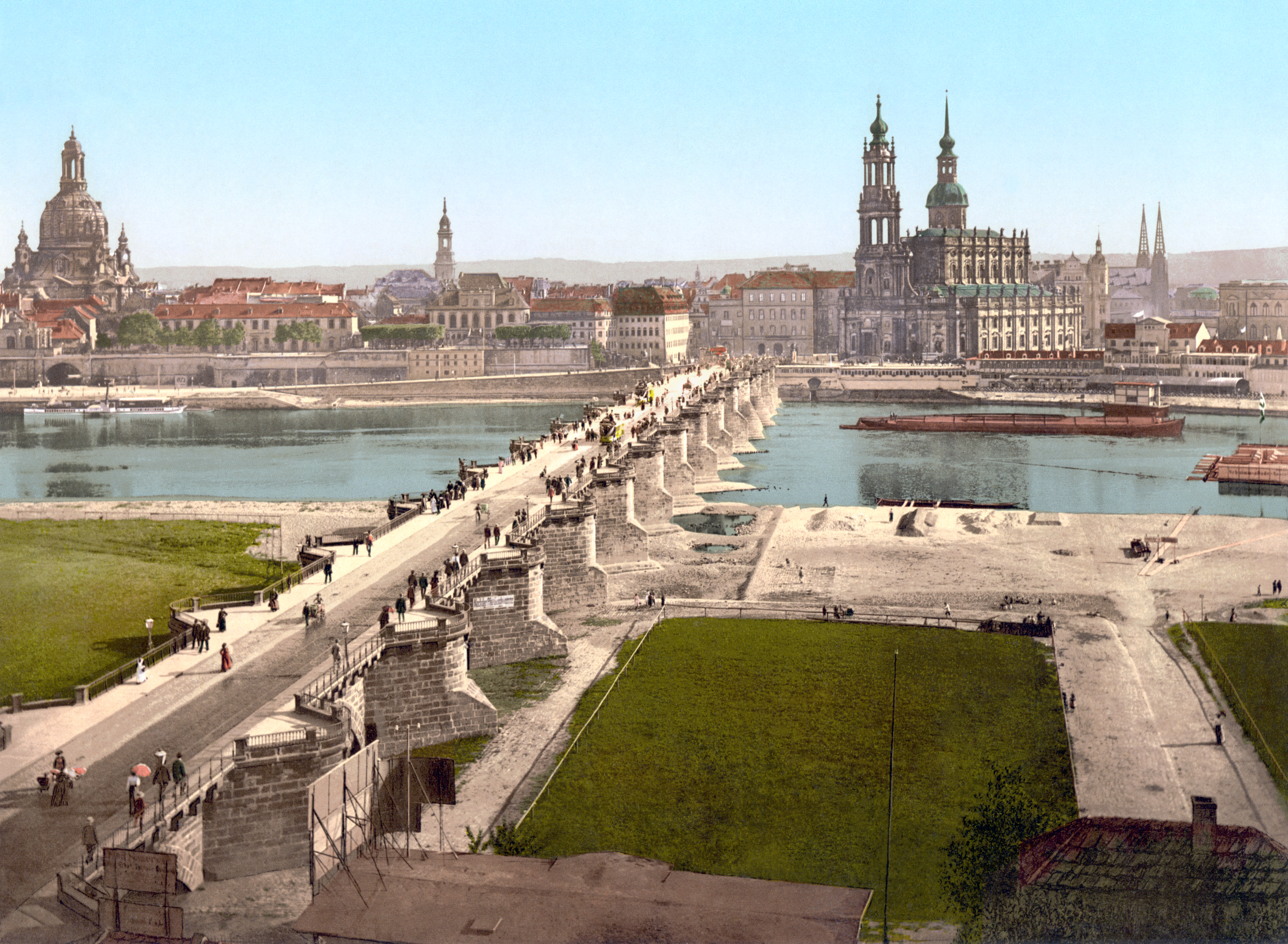
(From Wikimedia Commons)
Then, one night in the final days of World War Two, the city was razed to the ground by Allied bomber jets. In a matter of minutes, literally tens of thousands of civilians – men, women and children – were burned alive in their homes, and centuries of art and culture were lost forever.
Of course, none of the major German cities emerged completely unscathed from the second world war. Only 10% of Berlin was left standing by the time the Allies captured it. But the reason the destruction of Dresden is significant is that the city was never seen as a particularly strategic military target.
There were plenty of factories on the outskirts that supported the Nazi war effort, but they were left relatively unharmed by the air offensive. It was the city centre, where ordinary people lived and some of Europe’s most important cultural artefacts were housed, that was obliterated.
The bombing of Dresden is one of those events that hasn’t fit neatly into the “Allies good, Germany bad” narrative of WW2. Instead, it is seen as one of the most horrific examples of the savagery of war and its impact on civilians.
Visiting Dresden today, it’s hard to believe that it could have come through all the craziness of the last hundred years in the shape it is. It makes me think of Daniel Craig as James Bond, fighting henchmen in the mud in one scene and looking sharp and polished in a tuxedo the next. Thanks to focused reconstruction that was started by the Soviets and continued apace after reunification, the place looks a million bucks.
I caught my first glimpse of the city at dusk, crossing the Carolabrücke in a tram. The Elbe glistened in the late evening sun, and the spires and domes of the Altstadt stood proud and shapely against a fierce orange sky. It took my breath away. It would have taken my breath away even without the wrenching back story. Dresden is simply magnificent. Mutti Merkel, I pay up my solidarity tax with compliments.
For many Dresdners, the symbol of their city was always the beloved old church, Frauenkirche. Here’s a photo I found posted on an information board, showing what the church looked like in the immediate aftermath of the war:

I mean, the place had gone to pasture, for heaven’s sake. That’s how utterly destroyed it was. And yet it stands proud again today, restored to all its former glory. Although it’s been painstakingly reconstructed from the original plans, the church definitely looks new from the outside. A few of the original stones, blackened from fire, were salvaged from the rubble and pepper the exterior.

The inside of the church looks so new as to appear strangely gaudy, when your eye is accustomed to the faded grandeur of older churches. The one old thing that they did keep in the interior was the magnificent old cross that topped the original church. It was found in the ruins, warped and twisted by fire. The new cross that replaces this one has great symbolism. The German government commissioned it to be forged by a British goldsmith whose father was part of the air crew that carried out the Dresden bombings.

“Every stone in the new city bears the invisible letters: PEACE”
Restoring Dresden to its former glory isn’t just a cultural project – it’s very smart business, too. I don’t think it’ll be too long before the reconstruction of the city has paid for itself. When I was there, it was packed with tourists ooh-ing and aah-ing over the gems of the restored Altstadt – the imposing Semper Opera House, the wedding cake-like Zwinger Palace, the beautiful views from Brühl’s Terrace, and the open-air Backstreet Boys concert on the roof of the Hofkirche.

(Ok, so they’re not really the Backstreet Boys. But don’t they totally have the same mannerisms?)
The main realisation I had in Dresden, though, was that as much as I like the eye candy of pretty Baroque buildings, the style of German architecture that I really have a soft spot for is the Communist-era stuff. ‘Cos these DDR guys were classy. They were thoroughly modern of course, but knew how to blend their innovations in tastefully with the older stuff.

Bahahahaha. I literally cracked up in the middle of the street when I saw this.
But seriously, as vilified as Communist-era architecture seems to be, I reckon what Dresden has done with it is simply brilliant. I think the big boxy Plattenbau buildings have some real character with a zany lick of paint like this.

I really liked the mix of architecture here – it reminded me a lot of Berlin – except that Berlin is huge and Dresden is very compact. But that just makes the scattered relics of the DDR easier to discover and enjoy.
Across the new market square from Frauenkirche is the Kulturpalast (Culture Palace). They’ve retained this mural on one side of the building, even though it’s clearly propaganda. It reminded me of a similar “happy communists!!!!!!!!11” mural in the Regierungsviertel in Berlin, which ironically faced onto a square where unhappy communists staged a protest in 1953 that was brutally put down by DDR tanks.

And then there are the everyday bits and pieces of East German streetscape that transcend their utilitarian value just by being so unique. Like those goofy fluoro above-ground pipes, and the jaunty top-hatted Ampelmännchen on the pedestrian traffic lights. Honestly, I just can’t help but break into a goofy grin whenever I see an Ampelmännchen. They’re just so freakin’ happy about crossing the street.
But my greatest Ossi discovery of the trip? The Ampelfrau. OMG.

I guess even men made out of green glass and light bulbs need a lady in their life.
Other highlights:
I went to an awesome Ossi brewpub. As much as I like Bavarian beer, you do start to tire of the same few Reinheitsgebot styles after a while. It was nice to try some other varieties of German beer for a change. Among the brews on offer: Rot (a red ale), Altbier (a brown ale that originated in Düsseldorf), and Dresdner apple cider. The place also had a very old-school feel to it, with the faded wallpaper, old wooden furniture, and paintings of Old Dresden on the walls.
Countering the recent ugly neo-Nazi movements in the east are the hundreds of stickers and posters across the town that call for zero tolerance against xenophobia and hate. It became a fun game to spot them plastered around the city.

I spent a beautiful sunny afternoon eating ice cream on the banks of the Elbe alongside hundreds of picnicking families. I liked the fact that they have left a lot of the riverbank fairly undeveloped so you can lie in the long grass with a bit of privacy and just watch the clouds scudding across the sky. Very peaceful.